

longstanding industrial base
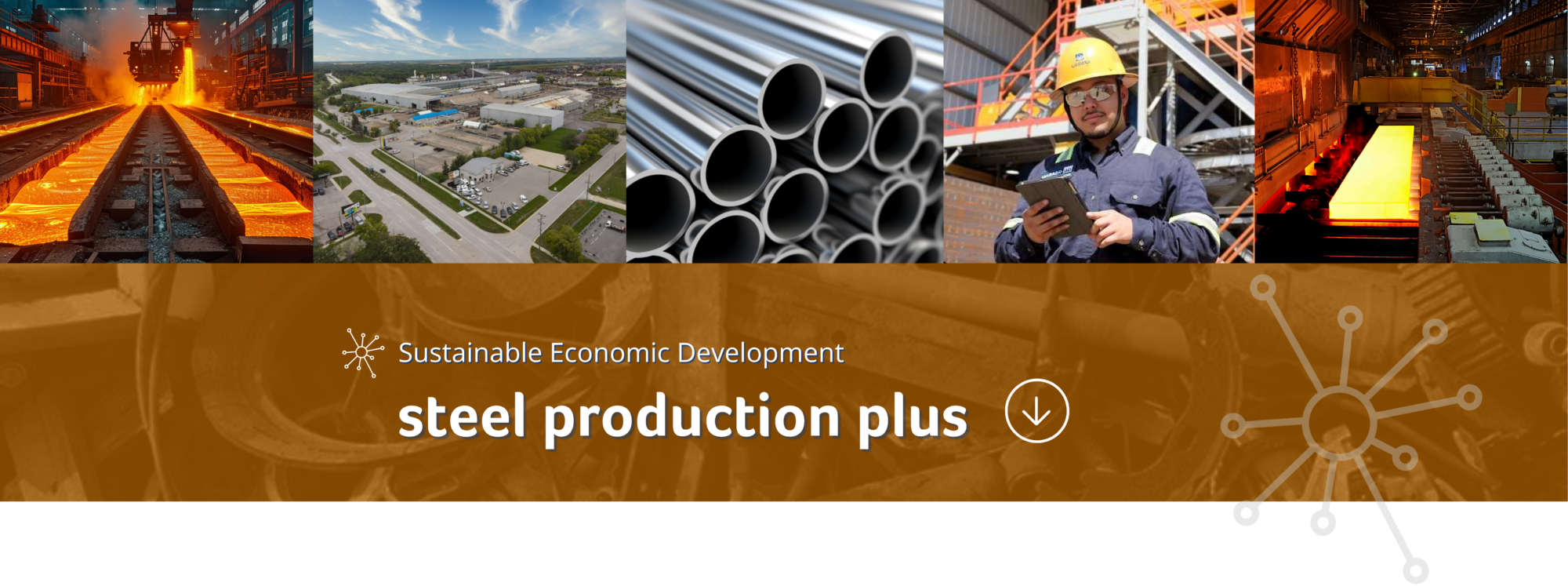
Selkirk is a prime location for investment in steel production, manufacturing, and circular economy innovation. The city’s industrial base has been a cornerstone of the local economy for over a century. Steel production and supporting industries form a resilient network that support economic activity and regional supply chains. Strong transportation links and its position within a broader industrial corridor allow for efficient movement of goods. It also improves integration with surrounding markets and supplier networks. Together, these advantages reinforce Selkirk’s position as a centre for industrial activity and future investment.
key industry leader
At the heart of Selkirk’s industrial base is Gerdau, a long-standing leader in low-carbon steel production. Gerdau’s Selkirk steel mill has operated since 1995, building on a steelmaking legacy that began over a century ago. That legacy began with the establishment of the Manitoba Rolling Mills which helped shape the city’s industrial economy. Today, the mill is recognized as one of the greenest in Western Canada. It uses recycled scrap metal and clean Manitoba Hydro electricity, significantly reducing greenhouse gas emissions. Steel produced and recycled in Selkirk supports diverse manufacturing applications worldwide, including transportation, infrastructure, energy, defence, and agriculture.
Gerdau’s steel reaches far beyond Selkirk. It is used in elevator guide rails across North America and in globally recognized landmarks. These include the Taipei 101 Tower in Taiwan, the Burj Khalifa Tower in Dubai, and the Eiffel Tower in Paris.
Selkirk is a centre for clean steel production, supported by established domestic and international supply chains. Together, these strengths position Selkirk as a competitive and forward-looking centre for sustainable steel manufacturing and long-term economic growth.


innovation cluster
Selkirk is home to a cluster of metal fabricators and manufacturing firms. Among these firms are Opta Group, Selkirk Machine Works, International Pipe, Kinetic Machine Works, and Karrich Industries. Collectively, these companies form an innovative and deeply integrated value chain, recognized for competitiveness, value creation, and client service. They also demonstrate some of the most sophisticated and efficient steel inventory management practices in North America. Close ties with Gerdau position companies like Black Cat Wear Parts as key suppliers to global heavy manufacturing leaders.
strategic advantages
This well-connected ecosystem provides strategic advantages for new entrants investing in Selkirk’s steel sector:
- Proximity among manufacturers, suppliers, processors, and customers
- Dependable access to inventory
- Value-added processing opportunities
- A collaborative business environment
Manitoba offers competitive electricity rates, with 97% generated from renewable sources, alongside a highly skilled workforce. Selkirk delivers an unmatched opportunity for industrial growth in the North American steel sector.
making the circular economy go around
Selkirk presents a strong opportunity to advance circular economy principles by repurposing industrial by-products from its steel sector. Recycling and manufacturing processes in this industry generate valuable by-products that can serve as source materials or co-products for other manufacturers.
Co-products generated from steel production have a wide range of applications across industries. Examples may include:
- Blast furnace slag used as clinker in cement-making.
- Steelmaking slag aggregate applied in road construction and soil improvement.
- Process gases recovered for heat and electricity generation.
Businesses and investors can leverage these materials in innovative and sustainable ways. This improves resource efficiency, strengthens circular economy outcomes, and supports new value creation across industries.


Selkirk is a prime location for investment in steel production, manufacturing, and circular economy innovation. The city’s industrial base has been a cornerstone of the local economy for over a century. Steel production and supporting industries form a resilient network that support economic activity and regional supply chains. Strong transportation links and its position within a broader industrial corridor allow for efficient movement of goods. It also improves integration with surrounding markets and supplier networks. Together, these advantages reinforce Selkirk’s position as a centre for industrial activity and future investment.

key industry leader
At the heart of Selkirk’s industrial base is Gerdau, a long-standing leader in low-carbon steel production. Gerdau’s Selkirk steel mill has operated since 1995, building on a steelmaking legacy that began over a century ago. That legacy began with the establishment of the Manitoba Rolling Mills which helped shape the city’s industrial economy. Today, the mill is recognized as one of the greenest in Western Canada. It uses recycled scrap metal and clean Manitoba Hydro electricity, significantly reducing greenhouse gas emissions. Steel produced and recycled in Selkirk supports diverse manufacturing applications worldwide, including transportation, infrastructure, energy, defence, and agriculture.
Gerdau’s steel reaches far beyond Selkirk. It is used in elevator guide rails across North America and in globally recognized landmarks. These include the Taipei 101 Tower in Taiwan, the Burj Khalifa Tower in Dubai, and the Eiffel Tower in Paris.
Selkirk is a centre for clean steel production, supported by established domestic and international supply chains. Together, these strengths position Selkirk as a competitive and forward-looking centre for sustainable steel manufacturing and long-term economic growth.

innovation cluster
Selkirk is home to a cluster of metal fabricators and manufacturing firms. Among these firms are Opta Group, Selkirk Machine Works, International Pipe, Kinetic Machine Works, and Karrich Industries. Collectively, these companies form an innovative and deeply integrated value chain, recognized for competitiveness, value creation, and client service. They also demonstrate some of the most sophisticated and efficient steel inventory management practices in North America. Close ties with Gerdau position companies like Black Cat Wear Parts as key suppliers to global heavy manufacturing leaders.
strategic advantages
This well-connected ecosystem provides strategic advantages for new entrants investing in Selkirk’s steel sector:
- Proximity among manufacturers, suppliers, processors, and customers
- Dependable access to inventory
- Value-added processing opportunities
- A collaborative business environment
Manitoba offers competitive electricity rates, with 97% generated from renewable sources, alongside a highly skilled workforce. Selkirk delivers an unmatched opportunity for industrial growth in the North American steel sector.

making the circular economy go around
Selkirk presents a strong opportunity to advance circular economy principles by repurposing industrial by-products from its steel sector. Recycling and manufacturing processes in this industry generate valuable by-products that can serve as source materials or co-products for other manufacturers.
Co-products generated from steel production have a wide range of applications across industries. Examples may include:
- Blast furnace slag used as clinker in cement-making.
- Steelmaking slag aggregate applied in road construction and soil improvement.
- Process gases recovered for heat and electricity generation.
Businesses and investors can leverage these materials in innovative and sustainable ways. This improves resource efficiency, strengthens circular economy outcomes, and supports new value creation across industries.

Selkirk is a prime location for investment in steel production, manufacturing, and circular economy innovation. The city’s industrial base has been a cornerstone of the local economy for over a century. Steel production and supporting industries form a resilient network that support economic activity and regional supply chains. Strong transportation links and its position within a broader industrial corridor allow for efficient movement of goods. It also improves integration with surrounding markets and supplier networks. Together, these advantages reinforce Selkirk’s position as a centre for industrial activity and future investment.
key industry leader
At the heart of Selkirk’s industrial base is Gerdau, a long-standing leader in low-carbon steel production. Gerdau’s Selkirk steel mill has operated since 1995, building on a steelmaking legacy that began over a century ago. That legacy began with the establishment of the Manitoba Rolling Mills which helped shape the city’s industrial economy. Today, the mill is recognized as one of the greenest in Western Canada. It uses recycled scrap metal and clean Manitoba Hydro electricity, significantly reducing greenhouse gas emissions. Steel produced and recycled in Selkirk supports diverse manufacturing applications worldwide, including transportation, infrastructure, energy, defence, and agriculture.
Gerdau’s steel reaches far beyond Selkirk. It is used in elevator guide rails across North America and in globally recognized landmarks. These include the Taipei 101 Tower in Taiwan, the Burj Khalifa Tower in Dubai, and the Eiffel Tower in Paris.
Selkirk is a centre for clean steel production, supported by established domestic and international supply chains. Together, these strengths position Selkirk as a competitive and forward-looking centre for sustainable steel manufacturing and long-term economic growth.
innovation cluster
Selkirk is home to a cluster of metal fabricators and manufacturing firms. Among these firms are Opta Group, Selkirk Machine Works, International Pipe, Kinetic Machine Works, and Karrich Industries. Collectively, these companies form an innovative and deeply integrated value chain, recognized for competitiveness, value creation, and client service. They also demonstrate some of the most sophisticated and efficient steel inventory management practices in North America. Close ties with Gerdau position companies like Black Cat Wear Parts as key suppliers to global heavy manufacturing leaders.
strategic advantages
This well-connected ecosystem provides strategic advantages for new entrants investing in Selkirk’s steel sector:
- Proximity among manufacturers, suppliers, processors, and customers
- Dependable access to inventory
- Value-added processing opportunities
- A collaborative business environment
Manitoba offers competitive electricity rates, with 97% generated from renewable sources, alongside a highly skilled workforce. Selkirk delivers an unmatched opportunity for industrial growth in the North American steel sector.
making the circular economy go around
Selkirk presents a strong opportunity to advance circular economy principles by repurposing industrial by-products from its steel sector. Recycling and manufacturing processes in this industry generate valuable by-products that can serve as source materials or co-products for other manufacturers.
Co-products generated from steel production have a wide range of applications across industries. Examples may include:
- Blast furnace slag used as clinker in cement-making.
- Steelmaking slag aggregate applied in road construction and soil improvement.
- Process gases recovered for heat and electricity generation.
Businesses and investors can leverage these materials in innovative and sustainable ways. This improves resource efficiency, strengthens circular economy outcomes, and supports new value creation across industries.