

planning for the future
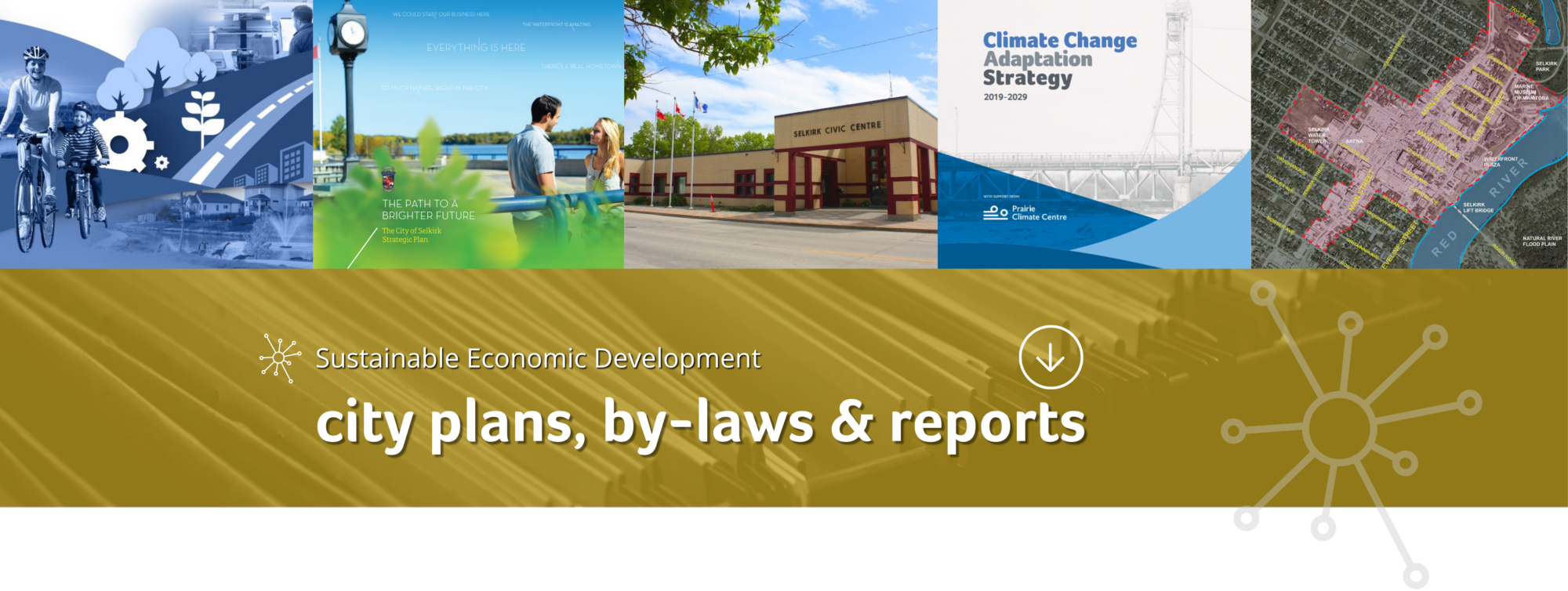
Explore Selkirk’s City plans, by-laws, and reports to see the vision and strategies shaping the city’s growth and development. This section provides access to long-term planning documents, strategic frameworks, development plans, and supporting reports that guide Selkirk’s sustainable growth, land use, infrastructure, and economic development.
long-term plans & strategies

City of Selkirk Community Strategic Plan
The City of Selkirk’s Community Strategic Plan outlines priorities and guiding principles. Actionable programs, policies, and by-laws support these priorities. Together, they ensure sustainability remains a core function of city government.
The Strategic Plan provides a roadmap for Selkirk’s future. It outlines 21 community-driven goals under five strategic priorities:
- Vibrant, safe, and healthy community
- Strong and stable local economy
- Safe and sustainable infrastructure
- Maximum value from community resources
- Environmental stewardship
Importantly, this plan is not set in stone. The City of Selkirk recognizes the need to adapt to changing conditions. Therefore, the City will continue to update its plan to meet evolving community needs. Learn more.

Climate Change Adaptation Strategy
The City of Selkirk partnered with the Prairie Climate Centre (PCC) to address the current and future impacts of climate change. The PCC educated City staff on seasonal climate impacts, helping departments assess risks across service areas.
Selkirk’s Climate Change Adaptation Strategy provides a practical, cost-effective plan for managing climate impacts. The City integrates this strategy into its Capital Asset Management Program. To guide this work, climate data and local knowledge are used to assess impacts across all city services.
As a result, proactive measures reduce reactive crisis response. The strategy outlines how the City protects infrastructure, supports service delivery, and strengthens long-term resilience. Learn more here.

West End Concept Plan
The West End Concept Plan sets the overarching vision for Selkirk’s long-term development, aligning with the City’s strategic planning objectives and climate change adaptation goals. Designed around guiding principles, the plan aims to:
- Promote development that enhances community health and wellbeing, while minimizing environmental impact, energy use and reliance on non-renewables.
- Cultivate innovation and stimulate economic development.
- Nurture social adhesion and cultural inclusion.
- Protect and enhance natural heritage features.
The plan envisions a 670-acre sustainable mixed-use community with over 10,000 new residents and 200,000+ square feet of commercial space—effectively doubling the city’s population. A pedestrian-oriented Mixed-Use Village will integrate residential, commercial, institutional, and cultural uses while fostering health, social inclusion, economic growth, and environmental sustainability.
With the City owning approximately 55% of the West End lands, the City can guide development to follow sustainable practices and align with the strategic vision. Learn more here.

Capital Asset Management Program
Capital Asset Management helps municipalities catalog, track, and manage assets more effectively. It uses predictive modeling, long-range maintenance planning, and financial tools to inform decision-making. These tools help municipalities get the most value from infrastructure.
Selkirk’s Capital Asset Management Strategy guides how infrastructure is maintained, upgraded, and replaced. This includes roads, water systems, and public facilities. The strategy maximizes service life, reduces costs, and limits environmental impact.
Council approved By-law 5300 in 2017, which mandates the City to have and maintain an asset management program. The By-law defines the program’s objectives and sets clear responsibilities for City administration and Council. Through this framework, the City supports supports effective program delivery and embeds asset management into operations and planning. Learn more here.

Downtown Selkirk Renewal Strategy
The Downtown Selkirk Renewal Strategy sets out clear objectives to guide revitalization and ensure the downtown remains a vibrant, safe, and attractive place for people to live, work, shop, and play. The objectives are to:
- Enhance the character of Manitoba Avenue East and Main & Eveline Streets as “historic main streets”
- Celebrate and capitalize on our cultural assets and heritage
- Improve the visual character of the downtown
- Encourage higher density residential development and mixed uses for buildings
- Facilitate the orderly (re)development of vacant or underutilized land within the downtown
- Improve the connectivity and transportation for all users of the roadway, and promote the downtown as a pedestrian and bicycle friendly destination
- Improve the quality of our parks and public spaces, and support the continued development of the waterfront and vicinity as Selkirk’s “meeting place”
- Encourage investment and a variety of commercial enterprises to serve local residents and promote tourism to downtown.

Economic Incentive By-Law
The Economic Incentive By-law is a program to incent economic development within the city. It aims to:
- Enhance the visual character of the downtown
- Increase the density of residential dwellings in the downtown
- Create jobs in the economy through business development and expansion
- Preserve the heritage buildings and culture of the city
- Transform brownfield land into developable and useable land
- Improve assessment value of the properties, specifically in the downtown
- Expand of commercial and industrial base of the city
land use & development by-laws

Development Plan
All land use and development decisions are required to be generally consistent with the City’s in-force Development Plan.
In 2022, Selkirk made the bold move to leave the Red River Planning District (RRPD), bringing planning and building permitting in-house. The City’s Planning Division is delivering on the enhanced quality and speed of service that was envisioned. As required under Manitoba’s Planning Act, Selkirk’s Planning Division has been working on an update to the City’s Development Plan to reflect this transition.
Therefore, until a new Development Plan is adopted as a by-law, the current in-force Development Plan (The Red River Planning District Development Plan), remains in effect.

Zoning By-Law
The City of Selkirk Zoning By-Law establishes specific regulations for how land can be used and developed. It divides land into residential, commercial, industrial, agricultural, and institutional zones, each with specific rules governing permitted uses, building size, setbacks, and development standards. The by-law ensures orderly growth while supporting a mix of housing, business, and industrial development across the community. Learn more here.

Building By-Law
The Building By-law is intended to regulate new and existing construction including the design, construction, erection, placement, alteration, repair, renovation, demolition, relocation, removal, occupancy, change in occupancy of any building or premises, and to establish regulations governing the grading of property for the purposes of managing storm water runoff.
It adopts the building construction codes and standards, and establishes administrative requirements and procedures for the enforcement of the Code. Learn more here.


Explore Selkirk’s City plans, by-laws, and reports to see the vision and strategies shaping the city’s growth and development. This section provides access to long-term planning documents, strategic frameworks, development plans, and supporting reports that guide Selkirk’s sustainable growth, land use, infrastructure, and economic development.
long-term plans & strategies
City of Selkirk Community Strategic Plan
The City of Selkirk’s Community Strategic Plan outlines priorities and guiding principles. Actionable programs, policies, and by-laws support these priorities. Together, they ensure sustainability remains a core function of city government.
The Strategic Plan provides a roadmap for Selkirk’s future. It outlines 21 community-driven goals under five strategic priorities:
- Vibrant, safe, and healthy community
- Strong and stable local economy
- Safe and sustainable infrastructure
- Maximum value from community resources
- Environmental stewardship
Importantly, this plan is not set in stone. The City of Selkirk recognizes the need to adapt to changing conditions. Therefore, the City will continue to update its plan to meet evolving community needs. Learn more.
Climate Change Adaptation Strategy
The City of Selkirk partnered with the Prairie Climate Centre (PCC) to address the current and future impacts of climate change. The PCC educated City staff on seasonal climate impacts, helping departments assess risks across service areas.
Selkirk’s Climate Change Adaptation Strategy provides a practical, cost-effective plan for managing climate impacts. The City integrates this strategy into its Capital Asset Management Program. To guide this work, climate data and local knowledge are used to assess impacts across all city services. As a result, proactive measures reduce reactive crisis response. The strategy outlines how the City protects infrastructure, supports service delivery, and strengthens long-term resilience. Learn more here.
West End Concept Plan
The West End Concept Plan sets the overarching vision for Selkirk’s long-term development, aligning with the City’s strategic planning objectives and climate change adaptation goals. Designed around guiding principles, the plan aims to:
- Promote development that enhances community health and wellbeing, while minimizing environmental impact, energy use and reliance on non-renewables.
- Cultivate innovation and stimulate economic development.
- Nurture social adhesion and cultural inclusion.
- Protect and enhance natural heritage features.
The plan envisions a 670-acre sustainable mixed-use community with over 10,000 new residents and 200,000+ square feet of commercial space—effectively doubling the city’s population. A pedestrian-oriented Mixed-Use Village will integrate residential, commercial, institutional, and cultural uses while fostering health, social inclusion, economic growth, and environmental sustainability.
With the City owning approximately 55% of the West End lands, the City can guide development to follow sustainable practices and align with the strategic vision. Learn more here.
Capital Asset Management Program
Capital Asset Management helps municipalities catalog, track, and manage assets more effectively. It uses predictive modeling, long-range maintenance planning, and financial tools to inform decision-making. These tools help municipalities get the most value from infrastructure.
Selkirk’s Capital Asset Management Strategy guides how infrastructure is maintained, upgraded, and replaced. This includes roads, water systems, and public facilities. The strategy maximizes service life, reduces costs, and limits environmental impact.
Council approved By-law 5300 in 2017, which mandates the City to have and maintain an asset management program. The By-law defines the program’s objectives and sets clear responsibilities for City administration and Council. Through this framework, the City supports supports effective program delivery and embeds asset management into operations and planning. Learn more here.
Downtown Selkirk Renewal Strategy
The Downtown Selkirk Renewal Strategy sets out clear objectives to guide revitalization and ensure the downtown remains a vibrant, safe, and attractive place for people to live, work, shop, and play. The objectives are to:
- Enhance the character of Manitoba Avenue East and Main & Eveline Streets as “historic main streets”
- Celebrate and capitalize on our cultural assets and heritage
- Improve the visual character of the downtown
- Encourage higher density residential development and mixed uses for buildings
- Facilitate the orderly (re)development of vacant or underutilized land within the downtown
- Improve the connectivity and transportation for all users of the roadway, and promote the downtown as a pedestrian and bicycle friendly destination
- Improve the quality of our parks and public spaces, and support the continued development of the waterfront and vicinity as Selkirk’s “meeting place”
- Encourage investment and a variety of commercial enterprises to serve local residents and promote tourism to downtown.
Economic Incentive By-Law
The Economic Incentive By-law is a program to incent economic development within the city. It aims to:
- Enhance the visual character of the downtown
- Increase the density of residential dwellings in the downtown
- Create jobs in the economy through business development and expansion
- Preserve the heritage buildings and culture of the city
- Transform brownfield land into developable and useable land
- Improve assessment value of the properties, specifically in the downtown
- Expand of commercial and industrial base of the city
land use & development by-laws
Development Plan
All land use and development decisions are required to be generally consistent with the City’s in-force Development Plan.
In 2022, Selkirk made the bold move to leave the Red River Planning District (RRPD), bringing planning and building permitting in-house. The City’s Planning Division is delivering on the enhanced quality and speed of service that was envisioned. As required under Manitoba’s Planning Act, Selkirk’s Planning Division has been working on an update to the City’s Development Plan to reflect this transition.
Therefore, until a new Development Plan is adopted as a by-law, the current in-force Development Plan (The Red River Planning District Development Plan), remains in effect.
Zoning By-Law
The City of Selkirk Zoning By-Law establishes specific regulations for how land can be used and developed. It divides land into residential, commercial, industrial, agricultural, and institutional zones, each with specific rules governing permitted uses, building size, setbacks, and development standards. The by-law ensures orderly growth while supporting a mix of housing, business, and industrial development across the community. Learn more here.
Building By-Law
The Building By-law is intended to regulate new and existing construction including the design, construction, erection, placement, alteration, repair, renovation, demolition, relocation, removal, occupancy, change in occupancy of any building or premises, and to establish regulations governing the grading of property for the purposes of managing storm water runoff.
It adopts the building construction codes and standards, and establishes administrative requirements and procedures for the enforcement of the Code. Learn more here.

Explore Selkirk’s City plans, by-laws, and reports to see the vision and strategies shaping the city’s growth and development. This section provides access to long-term planning documents, strategic frameworks, development plans, and supporting reports that guide Selkirk’s sustainable growth, land use, infrastructure, and economic development.
long-term plans & strategies
City of Selkirk Community Strategic Plan
The City of Selkirk’s Community Strategic Plan outlines priorities and guiding principles. Actionable programs, policies, and by-laws support these priorities. Together, they ensure sustainability remains a core function of city government.
The Strategic Plan provides a roadmap for Selkirk’s future. It outlines 21 community-driven goals under five strategic priorities:
- Vibrant, safe, and healthy community
- Strong and stable local economy
- Safe and sustainable infrastructure
- Maximum value from community resources
- Environmental stewardship
Importantly, this plan is not set in stone. The City of Selkirk recognizes the need to adapt to changing conditions. Therefore, the City will continue to update its plan to meet evolving community needs. Learn more.
Climate Change Adaptation Strategy
The City of Selkirk partnered with the Prairie Climate Centre (PCC) to address the current and future impacts of climate change. The PCC educated City staff on seasonal climate impacts, helping departments assess risks across service areas.
Selkirk’s Climate Change Adaptation Strategy provides a practical, cost-effective plan for managing climate impacts. The City integrates this strategy into its Capital Asset Management Program. To guide this work, climate data and local knowledge are used to assess impacts across all city services.
As a result, proactive measures reduce reactive crisis response. The strategy outlines how the City protects infrastructure, supports service delivery, and strengthens long-term resilience. Learn more here.
West End Concept Plan
The West End Concept Plan sets the overarching vision for Selkirk’s long-term development, aligning with the City’s strategic planning objectives and climate change adaptation goals. Designed around guiding principles, the plan aims to:
- Promote development that enhances community health and wellbeing, while minimizing environmental impact, energy use and reliance on non-renewables.
- Cultivate innovation and stimulate economic development.
- Nurture social adhesion and cultural inclusion.
- Protect and enhance natural heritage features.
The plan envisions a 670-acre sustainable mixed-use community with over 10,000 new residents and 200,000+ square feet of commercial space—effectively doubling the city’s population. A pedestrian-oriented Mixed-Use Village will integrate residential, commercial, institutional, and cultural uses while fostering health, social inclusion, economic growth, and environmental sustainability.
With the City owning approximately 55% of the West End lands, the City can guide development to follow sustainable practices and align with the strategic vision. Learn more here.
Capital Asset Management Program
Capital Asset Management helps municipalities catalog, track, and manage assets more effectively. It uses predictive modeling, long-range maintenance planning, and financial tools to inform decision-making. These tools help municipalities get the most value from infrastructure.
Selkirk’s Capital Asset Management Strategy guides how infrastructure is maintained, upgraded, and replaced. This includes roads, water systems, and public facilities. The strategy maximizes service life, reduces costs, and limits environmental impact.
Council approved By-law 5300 in 2017, which mandates the City to have and maintain an asset management program. The By-law defines the program’s objectives and sets clear responsibilities for City administration and Council. Through this framework, the City supports supports effective program delivery and embeds asset management into operations and planning. Learn more here.
Downtown Selkirk Renewal Strategy
The Downtown Selkirk Renewal Strategy sets out clear objectives to guide revitalization and ensure the downtown remains a vibrant, safe, and attractive place for people to live, work, shop, and play. The objectives are to:
- Enhance the character of Manitoba Avenue East and Main & Eveline Streets as “historic main streets”
- Celebrate and capitalize on our cultural assets and heritage
- Improve the visual character of the downtown
- Encourage higher density residential development and mixed uses for buildings
- Facilitate the orderly (re)development of vacant or underutilized land within the downtown
- Improve the connectivity and transportation for all users of the roadway, and promote the downtown as a pedestrian and bicycle friendly destination
- Improve the quality of our parks and public spaces, and support the continued development of the waterfront and vicinity as Selkirk’s “meeting place”
- Encourage investment and a variety of commercial enterprises to serve local residents and promote tourism to downtown.
Economic Incentive By-Law
The Economic Incentive By-law is a program to incent economic development within the city. It aims to:
- Enhance the visual character of the downtown
- Increase the density of residential dwellings in the downtown
- Create jobs in the economy through business development and expansion
- Preserve the heritage buildings and culture of the city
- Transform brownfield land into developable and useable land
- Improve assessment value of the properties, specifically in the downtown
- Expand of commercial and industrial base of the city
land use & development by-laws
Development Plan
All land use and development decisions are required to be generally consistent with the City’s in-force Development Plan.
In 2022, Selkirk made the bold move to leave the Red River Planning District (RRPD), bringing planning and building permitting in-house. The City’s Planning Division is delivering on the enhanced quality and speed of service that was envisioned. As required under Manitoba’s Planning Act, Selkirk’s Planning Division has been working on an update to the City’s Development Plan to reflect this transition.
Therefore, until a new Development Plan is adopted as a by-law, the current in-force Development Plan (The Red River Planning District Development Plan), remains in effect.
Zoning By-Law
The City of Selkirk Zoning By-Law establishes specific regulations for how land can be used and developed. It divides land into residential, commercial, industrial, agricultural, and institutional zones, each with specific rules governing permitted uses, building size, setbacks, and development standards. The by-law ensures orderly growth while supporting a mix of housing, business, and industrial development across the community. Learn more here.
Building By-Law
The Building By-law is intended to regulate new and existing construction including the design, construction, erection, placement, alteration, repair, renovation, demolition, relocation, removal, occupancy, change in occupancy of any building or premises, and to establish regulations governing the grading of property for the purposes of managing storm water runoff.
It adopts the building construction codes and standards, and establishes administrative requirements and procedures for the enforcement of the Code. Learn more here.