
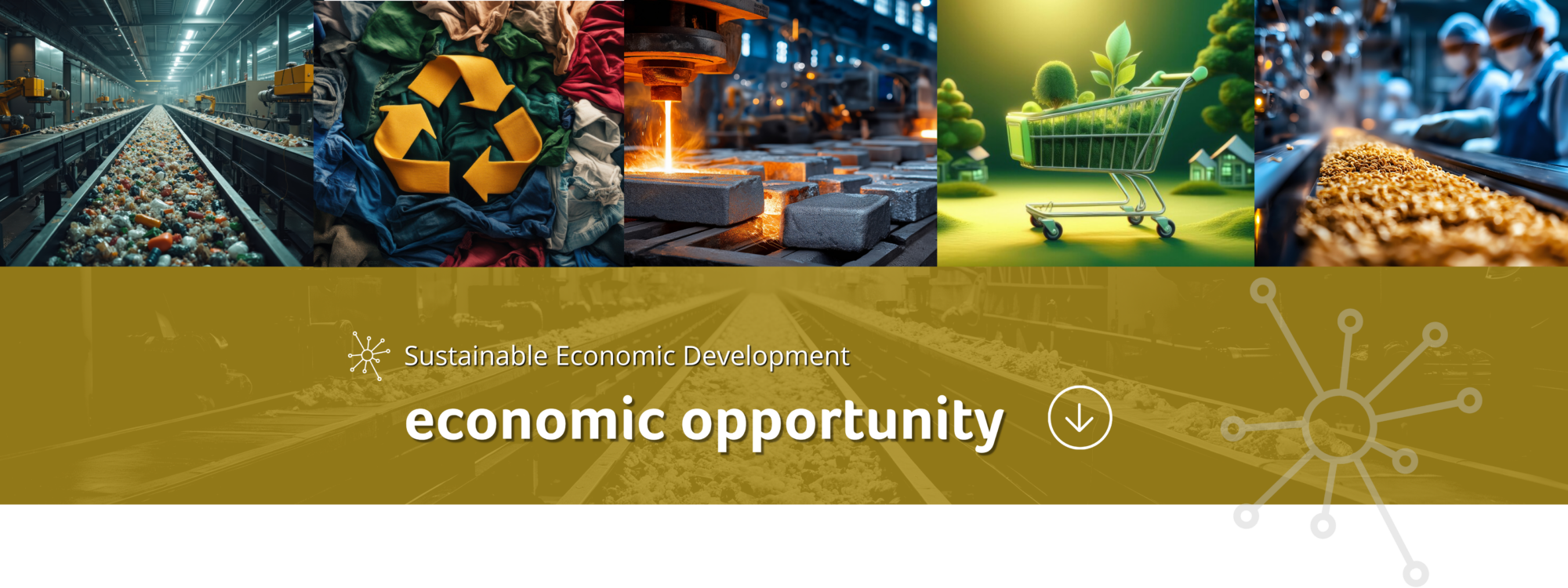
emerging business opportunities
Global shifts toward sustainable economic models are shaping opportunities for businesses in Selkirk focused on innovation and environmental responsibility. These opportunities are grounded in the city’s unique identity, regional context, and evolving consumer values and industry trends. Each area highlighted below reflects the connection between local resources and scalable business models. They outline high-potential opportunities for Selkirk-based businesses to create economic and environmental value while supporting sustainability goals.
The business opportunities highlighted below are intended to inspire innovation and illustrate potential areas of growth. They are not endorsements or guarantees of viability, profitability, or suitability for any specific business. Companies should conduct their own research and due diligence before pursuing these ideas.

value-added opportunities
Selkirk offers conditions that support the development of value-added green businesses. These operations can transform raw or underutilized local and regional resources and waste streams into high-value sustainable products. Potential operations may include:
waste stream opportunities
Repurposing industrial by-products advances circular economy principles by turning waste into valuable resources. For example, materials like steel slag, dust, sludge, and waste heat can become inputs for new processes. As a result, companies can reduce emissions and improve resource efficiency across operations. These materials enable applications such as alternative energy systems, and strengthen circular manufacturing processes. They also help develop new sustainable technologies and cross-sector collaborations. Selkirk’s established industrial base provides an ideal setting for industrial symbiosis. This approach strengthens regional collaboration and builds a more integrated and sustainable local production network.


upcycled material innovation
Post-consumer textiles, construction and demolition debris, and industrial plastics can become innovative goods for environmentally conscious consumers and businesses. Selkirk provides access to small-scale industrial spaces that may be more affordable than comparable options in Winnipeg. The community’s focus on waste reduction and circular economy principles supports collaboration in material sourcing, sorting, and repurposing. This creates a supportive environment for sustainable, low-waste production ventures.
bio-based product manufacturing
Processing agricultural residues in Selkirk offers a strong opportunity to create high-value bio-based products. Materials such as straw, flax shives, corn stalks, and sustainably harvested timber from the Interlake Region can become bio-plastics (e.g. packaging and cutlery), bio-composites (e.g. building materials and automotive parts), and bio-fuels (e.g. biodiesel and bioethanol). Selkirk’s proximity to biomass supply chains, established transportation infrastructure, and provincial agri-innovation funding can support these operations.


industrial re-water integration
Utilizing treated wastewater in Selkirk offers a strong opportunity to advance circular industrial operations. The City’s wastewater treatment plant produces treated effluent that industries can reuse in manufacturing and processing activities. Companies can apply this water for non-potable uses such as cooling systems, equipment washing, and other industrial processes. Selkirk’s existing water infrastructure and industrial base enable reduced freshwater use, lower operating costs, and more resource-efficient production practices.
advanced sustainable agriculture processing
Developing dry processing facilities in Selkirk offers a strong opportunity to produce high-value goods from sustainably grown Interlake crops. These products include organic grains like wheat, oats, and barley; oilseeds such as flax, canola, and hemp; and fresh produce including berries and root vegetables.
Selkirk’s light industrial areas can host these operations and provide suitable space for expansion. Its central Interlake location ensures direct access to raw materials. Strong transportation links to Winnipeg enable efficient distribution and market reach. With abundant agricultural resources and strong connectivity, Selkirk serves as a strategic location for sustainable agriculture processing in the region.


green retail opportunities
Selkirk offers an ideal environment for green retail ventures that support the local economy through sustainable and ethically produced products. These initiatives engage the community and promote conscious consumption, meeting growing demand for local, eco-friendly goods. Potential operations may include:
regional sustainable goods marketplace
Developing a retail space or cooperative in Selkirk offers a strong opportunity to showcase sustainable, locally and regionally sourced products. Goods may include artisan crafts, handmade goods, locally produced foods, and other eco-friendly products. Selkirk’s local business community and growing interest in conscious consumption create favourable conditions for these ventures. Together, these advantages encourage entrepreneurship and support economic diversification.


repair & skill-sharing hub
Building a local repair economy in Selkirk can support sustainable practices while meeting everyday needs. A repair-focused hub could provide services for electronics, appliances, bicycles, and clothing, alongside workshops that teach hands-on repair skills. By extending product life, reducing waste, and building skills, Selkirk offers a supportive environment for a community-centered repair economy.

green services opportunities
The green services sector is growing rapidly, fueled by global shifts toward sustainability and climate resilience. Selkirk offers a strong foundation for service-based businesses that advance the transition to a low-carbon, climate-resilient economy. Potential operations may include:
interlake renewable energy deployment
Expanding renewable energy services can support the transition to a low-carbon, climate-resilient economy across the Interlake Region. For instance, services may include installation, maintenance, and consulting for solar panels and geothermal heating and cooling. Selkirk’s central location, access to light industrial space, and commitment to clean energy create a strong foundation for growth. This is demonstrated through Selkirk’s Recreation Complex solar array and the water treatment plant’s fossil‑fuel‑free geothermal system. Together, these assets strengthen the region’s capacity for sustainable, low-carbon solutions.


sustainable tourism & eco-adventure
Sustainable tourism in Selkirk can meet growing demand for meaningful, low-impact travel experiences. Opportunities could include eco-adventure services, guided nature tours, and educational programs. These connect visitors with the region’s landscapes while supporting environmental preservation. Selkirk’s rich history, vibrant culture, and location along the Red River, near Lake Winnipeg and provincial parks, strengthen its appeal. As a result, the city serves as a natural gateway for sustainable tourism and eco-adventure ventures.
waste reduction & diversion services
Offering specialized waste diversion services can support the Selkirk’s sustainability goals while meeting growing demand for environmentally responsible solutions. For example, services may include compost collection, e-waste and textile recycling, and sustainability consulting. The community’s strong environmental awareness and commitment to sustainability may encourage participation in waste reduction initiatives. These services can strengthen local capacity for effective and innovative waste management.


Global shifts toward sustainable economic models are shaping opportunities for businesses in Selkirk focused on innovation and environmental responsibility. These opportunities are grounded in the city’s unique identity, regional context, and evolving consumer values and industry trends. Each area highlighted below reflects the connection between local resources and scalable business models. They outline high-potential opportunities for Selkirk-based businesses to create economic and environmental value while supporting sustainability goals.
The business opportunities highlighted below are intended to inspire innovation and illustrate potential areas of growth. They are not endorsements or guarantees of viability, profitability, or suitability for any specific business. Companies should conduct their own research and due diligence before pursuing these ideas.

value-added opportunities
Selkirk offers conditions that support the development of value-added green businesses. These operations can transform raw or underutilized local and regional resources and waste streams into high-value sustainable products. Potential operations may include:

waste stream opportunities
Repurposing industrial by-products advances circular economy principles by turning waste into valuable resources. For example, materials like steel slag, dust, sludge, and waste heat can become inputs for new processes. As a result, companies can reduce emissions and improve resource efficiency across operations. These materials enable applications such as alternative energy systems, and strengthen circular manufacturing processes. They also help develop new sustainable technologies and cross-sector collaborations. Selkirk’s established industrial base provides an ideal setting for industrial symbiosis. This approach strengthens regional collaboration and builds a more integrated and sustainable local production network.

upcycled material innovation
Post-consumer textiles, construction and demolition debris, and industrial plastics can become innovative goods for environmentally conscious consumers and businesses. Selkirk provides access to small-scale industrial spaces that may be more affordable than comparable options in Winnipeg. The community’s focus on waste reduction and circular economy principles supports collaboration in material sourcing, sorting, and repurposing. This creates a supportive environment for sustainable, low-waste production ventures.

bio-based product manufacturing
Processing agricultural residues in Selkirk offers a strong opportunity to create high-value bio-based products. Materials such as straw, flax shives, corn stalks, and sustainably harvested timber from the Interlake Region can become bio-plastics (e.g. packaging and cutlery), bio-composites (e.g. building materials and automotive parts), and bio-fuels (e.g. biodiesel and bioethanol). Selkirk’s proximity to biomass supply chains, established transportation infrastructure, and provincial agri-innovation funding can support these operations.

industrial re-water integration
Utilizing treated wastewater in Selkirk offers a strong opportunity to advance circular industrial operations. The City’s wastewater treatment plant produces treated effluent that industries can reuse in manufacturing and processing activities. Companies can apply this water for non-potable uses such as cooling systems, equipment washing, and other industrial processes. Selkirk’s existing water infrastructure and industrial base enable reduced freshwater use, lower operating costs, and more resource-efficient production practices.

advanced sustainable agriculture processing
Developing dry processing facilities in Selkirk offers a strong opportunity to produce high-value goods from sustainably grown Interlake crops. These products include organic grains like wheat, oats, and barley; oilseeds such as flax, canola, and hemp; and fresh produce including berries and root vegetables.
Selkirk’s light industrial areas can host these operations and provide suitable space for expansion. Its central Interlake location ensures direct access to raw materials. Strong transportation links to Winnipeg enable efficient distribution and market reach. With abundant agricultural resources and strong connectivity, Selkirk serves as a strategic location for sustainable agriculture processing in the region.

green retail opportunities
Selkirk offers an ideal environment for green retail ventures that support the local economy through sustainable and ethically produced products. These initiatives engage the community and promote conscious consumption, meeting growing demand for local, eco-friendly goods. Potential operations may include:

regional sustainable goods marketplace
Developing a retail space or cooperative in Selkirk offers a strong opportunity to showcase sustainable, locally and regionally sourced products. Goods may include artisan crafts, handmade goods, locally produced foods, and other eco-friendly products. Selkirk’s local business community and growing interest in conscious consumption create favourable conditions for these ventures. Together, these advantages encourage entrepreneurship and support economic diversification.

repair & skill-sharing hub
Building a local repair economy in Selkirk can support sustainable practices while meeting everyday needs. A repair-focused hub could provide services for electronics, appliances, bicycles, and clothing, alongside workshops that teach hands-on repair skills. By extending product life, reducing waste, and building skills, Selkirk offers a supportive environment for a community-centered repair economy.

green services opportunities
The green services sector is growing rapidly, fueled by global shifts toward sustainability and climate resilience. Selkirk offers a strong foundation for service-based businesses that advance the transition to a low-carbon, climate-resilient economy. Potential operations may include:

interlake renewable energy deployment
Expanding renewable energy services can support the transition to a low-carbon, climate-resilient economy across the Interlake Region. For instance, services may include installation, maintenance, and consulting for solar panels and geothermal heating and cooling. Selkirk’s central location, access to light industrial space, and commitment to clean energy create a strong foundation for growth. This is demonstrated through Selkirk’s Recreation Complex solar array and the water treatment plant’s fossil‑fuel‑free geothermal system. Together, these assets strengthen the region’s capacity for sustainable, low-carbon solutions.

sustainable tourism & eco-adventure
Sustainable tourism in Selkirk can meet growing demand for meaningful, low-impact travel experiences. Opportunities could include eco-adventure services, guided nature tours, and educational programs. These connect visitors with the region’s landscapes while supporting environmental preservation. Selkirk’s rich history, vibrant culture, and location along the Red River, near Lake Winnipeg and provincial parks, strengthen its appeal. As a result, the city serves as a natural gateway for sustainable tourism and eco-adventure ventures.

waste reduction & diversion services
Offering specialized waste diversion services can support the Selkirk’s sustainability goals while meeting growing demand for environmentally responsible solutions. For example, services may include compost collection, e-waste and textile recycling, and sustainability consulting. The community’s strong environmental awareness and commitment to sustainability may encourage participation in waste reduction initiatives. These services can strengthen local capacity for effective and innovative waste management.

Global shifts toward sustainable economic models are shaping opportunities for businesses in Selkirk focused on innovation and environmental responsibility. These opportunities are grounded in the city’s unique identity, regional context, and evolving consumer values and industry trends. Each area highlighted below reflects the connection between local resources and scalable business models. They outline high-potential opportunities for Selkirk-based businesses to create economic and environmental value while supporting sustainability goals.
The business opportunities highlighted below are intended to inspire innovation and illustrate potential areas of growth. They are not endorsements or guarantees of viability, profitability, or suitability for any specific business. Companies should conduct their own research and due diligence before pursuing these ideas.

value-added opportunities
Selkirk offers conditions that support the development of value-added green businesses. These operations can transform raw or underutilized local and regional resources and waste streams into high-value sustainable products. Potential operations may include:
waste stream opportunities
Repurposing industrial by-products advances circular economy principles by turning waste into valuable resources. For example, materials like steel slag, dust, sludge, and waste heat can become inputs for new processes. As a result, companies can reduce emissions and improve resource efficiency across operations. These materials enable applications such as alternative energy systems, and strengthen circular manufacturing processes. They also help develop new sustainable technologies and cross-sector collaborations. Selkirk’s established industrial base provides an ideal setting for industrial symbiosis. This approach strengthens regional collaboration and builds a more integrated and sustainable local production network.
upcycled material innovation
Post-consumer textiles, construction and demolition debris, and industrial plastics can become innovative goods for environmentally conscious consumers and businesses. Selkirk provides access to small-scale industrial spaces that may be more affordable than comparable options in Winnipeg. The community’s focus on waste reduction and circular economy principles supports collaboration in material sourcing, sorting, and repurposing. This creates a supportive environment for sustainable, low-waste production ventures.
bio-based product manufacturing
Processing agricultural residues in Selkirk offers a strong opportunity to create high-value bio-based products. Materials such as straw, flax shives, corn stalks, and sustainably harvested timber from the Interlake Region can become bio-plastics (e.g. packaging and cutlery), bio-composites (e.g. building materials and automotive parts), and bio-fuels (e.g. biodiesel and bioethanol). Selkirk’s proximity to biomass supply chains, established transportation infrastructure, and provincial agri-innovation funding can support these operations.
industrial re-water integration
Utilizing treated wastewater in Selkirk offers a strong opportunity to advance circular industrial operations. The City’s wastewater treatment plant produces treated effluent that industries can reuse in manufacturing and processing activities. Companies can apply this water for non-potable uses such as cooling systems, equipment washing, and other industrial processes. Selkirk’s existing water infrastructure and industrial base enable reduced freshwater use, lower operating costs, and more resource-efficient production practices.
advanced sustainable agriculture processing
Developing dry processing facilities in Selkirk offers a strong opportunity to produce high-value goods from sustainably grown Interlake crops. These products include organic grains like wheat, oats, and barley; oilseeds such as flax, canola, and hemp; and fresh produce including berries and root vegetables.
Selkirk’s light industrial areas can host these operations and provide suitable space for expansion. Its central Interlake location ensures direct access to raw materials. Strong transportation links to Winnipeg enable efficient distribution and market reach. With abundant agricultural resources and strong connectivity, Selkirk serves as a strategic location for sustainable agriculture processing in the region.

green retail opportunities
Selkirk offers an ideal environment for green retail ventures that support the local economy through sustainable and ethically produced products. These initiatives engage the community and promote conscious consumption, meeting growing demand for local, eco-friendly goods. Potential operations may include:
regional sustainable goods marketplace
Developing a retail space or cooperative in Selkirk offers a strong opportunity to showcase sustainable, locally and regionally sourced products. Goods may include artisan crafts, handmade goods, locally produced foods, and other eco-friendly products. Selkirk’s local business community and growing interest in conscious consumption create favourable conditions for these ventures. Together, these advantages encourage entrepreneurship and support economic diversification.
repair & skill-sharing hub
Building a local repair economy in Selkirk can support sustainable practices while meeting everyday needs. A repair-focused hub could provide services for electronics, appliances, bicycles, and clothing, alongside workshops that teach hands-on repair skills. By extending product life, reducing waste, and building skills, Selkirk offers a supportive environment for a community-centered repair economy.

green services opportunities
The green services sector is growing rapidly, fueled by global shifts toward sustainability and climate resilience. Selkirk offers a strong foundation for service-based businesses that advance the transition to a low-carbon, climate-resilient economy. Potential operations may include:
interlake renewable energy deployment
Expanding renewable energy services can support the transition to a low-carbon, climate-resilient economy across the Interlake Region. For instance, services may include installation, maintenance, and consulting for solar panels and geothermal heating and cooling. Selkirk’s central location, access to light industrial space, and commitment to clean energy create a strong foundation for growth. This is demonstrated through Selkirk’s Recreation Complex solar array and the water treatment plant’s fossil‑fuel‑free geothermal system. Together, these assets strengthen the region’s capacity for sustainable, low-carbon solutions.
sustainable tourism & eco-adventure
Sustainable tourism in Selkirk can meet growing demand for meaningful, low-impact travel experiences. Opportunities could include eco-adventure services, guided nature tours, and educational programs. These connect visitors with the region’s landscapes while supporting environmental preservation. Selkirk’s rich history, vibrant culture, and location along the Red River, near Lake Winnipeg and provincial parks, strengthen its appeal. As a result, the city serves as a natural gateway for sustainable tourism and eco-adventure ventures.
waste reduction & diversion services
Offering specialized waste diversion services can support the Selkirk’s sustainability goals while meeting growing demand for environmentally responsible solutions. For example, services may include compost collection, e-waste and textile recycling, and sustainability consulting. The community’s strong environmental awareness and commitment to sustainability may encourage participation in waste reduction initiatives. These services can strengthen local capacity for effective and innovative waste management.